The Transformative Role of the Lecturer in Heritage-Based Education 5.0: From Knowledge Transmission to Innovation and National Development.
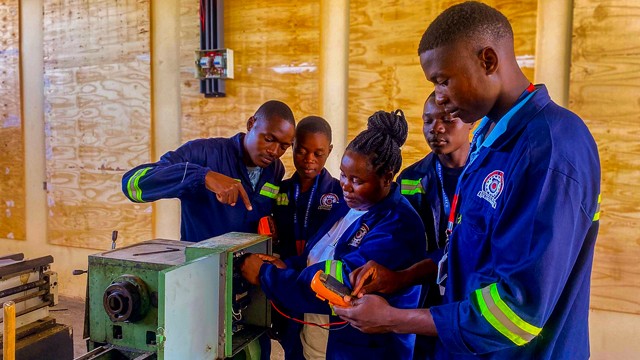 Lecturer doing practical demostration.
The policy foundations underpinning Heritage-Based Education 5.0 are clear, coherent, and firmly anchored in both continental and global development frameworks. The philosophy aligns with the African Union's Agenda 2063 and the Continental Education Strategy for Africa (CESA), while simultaneously complementing the aspirations of the United Nations Sustainable Development Goal 4, which advocates inclusive, equitable, and quality education for all.
Zimbabwe, like many developing nations, aspires to eradicate poverty, attain sustainable economic prosperity, and achieve industrial transformation. The realisation of this vision depends fundamentally on the type of education provided to its citizens—an education that equips learners with practical skills, entrepreneurial competencies, innovative capacities, cultural consciousness, and a strong work ethic.
Countries such as China, Malaysia, the Netherlands, South Korea, and Singapore have demonstrated that national development is driven by education systems that promote productivity, innovation, discipline, creativity, and hard work. Their citizens have been nurtured to create opportunities rather than wait for them, to solve problems rather than merely describe them, and to produce goods and services that improve the quality of life of their people. The remarkable transformation of these nations provides valuable lessons for Zimbabwe's educational trajectory.
Heritage-Based Education 5.0 embraces the enduring principle of learning by doing. It promotes learning through observation, imitation, experimentation, practice, innovation, and production. This practical orientation enables learners to acquire life skills that empower them to contribute meaningfully to their communities and to national development. It seeks not only to produce jobseekers but also innovators, industrialists, entrepreneurs, and responsible citizens.
A transformation in mindset is fundamental to the success of this philosophy. Individuals who believe in their abilities and commit themselves to excellence become agents of social and economic transformation. Within the framework of Heritage-Based Education 5.0, the lecturer occupies a pivotal position as a mentor, role model, and principal source of intellectual and moral influence on the student. Our own Deputy Minister of Higher and Tertiary Education Innovation Science and Technology Development Hon. S. Sibanda observed that “what the teacher tell a student is often regarded as more concreate by the student than what even the parent of the child may try to say” If a teacher teaches a student that 1 + 1 = 11 it will be an uphill task for the parent to correct this misconception.
This example demonstrates that lecturers are not merely transmitters of knowledge; they are architects of the nation's future. Their words, actions, and attitudes shape the mindset of students, influencing not only what they know but also how they think, innovate, solve problems, and contribute to national development. It is therefore imperative that lecturers embrace the principles of Heritage-Based Education 5.0 by cultivating creativity, innovation, integrity, entrepreneurship, and a commitment to producing graduates who are capable of driving Zimbabwe's industrialisation and socio-economic transformation.
Long before the advent of formal Western schooling systems, African societies had developed effective indigenous educational institutions that produced competent, productive, and morally upright citizens. Through heritage-based forms of education, communities nurtured accomplished farmers (hurudza), skilled blacksmiths (mhizha), expert hunters (vadzimba), builders, craftsmen, healers, and responsible young men and women grounded in the values of Hunhu/Ubuntu.
Learning was more experiential and deeply embedded within everyday life. Young people learned through observation, participation, imitation, repeated practice, and eventual mastery. Education prepared them to survive and flourish under varying environmental conditions—whether in fertile plains, mountainous regions, drought-prone areas, times of peace, or periods of conflict.
Contemporary educational theorists describe such progression through frameworks such as Bloom's Taxonomy, where learners move from acquiring knowledge to applying, analysing, evaluating, and ultimately creating. Significantly, indigenous African education had long embraced these principles through demonstration, apprenticeship, practice, reflection, and innovation.
Had these indigenous systems evolved without disruption, Africa's industrialisation trajectory might have advanced much earlier. Our forebears pioneered technologies such as iron smelting, pottery, weaving, irrigation systems, and sophisticated agricultural practices. Traditional institutions such as nhanga, mugota, and dare served as centres for vocational instruction, leadership development, citizenship formation, and the inculcation of Hunhu/Ubuntu values.
This historical perspective is important because it demonstrates that Heritage-Based Education 5.0 is not an entirely novel concept. Rather, it revitalises the strengths of indigenous knowledge systems and harmonises them with modern science, technology, innovation, and industrial production. Such a vision places enormous responsibility upon today's lecturers.
Lecturers must transcend the traditional role of merely transmitting theoretical knowledge. They are called upon to demonstrate practical skills, mentor innovators, coach entrepreneurs, facilitate research, and guide learners through authentic production processes. Students should be enabled to observe, imitate, practise, internalise, innovate, and eventually produce quality goods and services using locally available resources. In fulfilling this mandate, lecturers give practical expression to the national mantra: "Nyika inovakwa nevene vayo"—A nation is built by its own people. This responsibility also invites critical reflection on lecturer preparation. To what extent do professional qualifications such as the Education Trainers Diploma and Technical and Vocational Education qualifications adequately prepare lecturers for the demands of Heritage-Based Education 5.0?
Many traditional teacher education programmes were developed within the framework of Education 3.0, which primarily emphasised learner-centred pedagogies and cognitive development. While these approaches remain valuable, they often placed insufficient emphasis on practical competence, innovation, entrepreneurship, industrial production, and value creation.
The psychomotor dimension of learning was strongly emphasised by Benjamin Bloom in his taxonomy of educational objectives, which integrates three interrelated domains of learning: the cognitive domain (development of knowledge and intellectual capacity), the psychomotor domain (development of practical and technical skills), and the affective domain (development of attitudes, values, ethics, and dispositions). The balanced development of these domains is essential for producing well-rounded graduates capable of critical thinking, competent workmanship, and responsible citizenship.
Within the framework of Heritage-Based Education 5.0, these domains assume even greater significance. Education is no longer confined to the transmission of knowledge; it extends to innovation, industrialisation, community engagement, and the production of goods and services that address basic human needs. Learners are expected to transform theoretical knowledge into practical solutions, employ technical skills to create value, and uphold cultural values, love and preservation of one’s environment, integrity, and an unwavering commitment to excellence.
A graduate nurtured under Heritage-Based Education 5.0 should therefore possess intellectual competence to generate ideas, psychomotor proficiency to convert those ideas into quality goods and services, and affective maturity to ensure that such outputs are ethical, sustainable, culturally relevant, and beneficial to society. The harmonious integration of the cognitive, psychomotor, and affective domains consequently produces innovative, productive, and value-driven citizens who contribute meaningfully to national development.
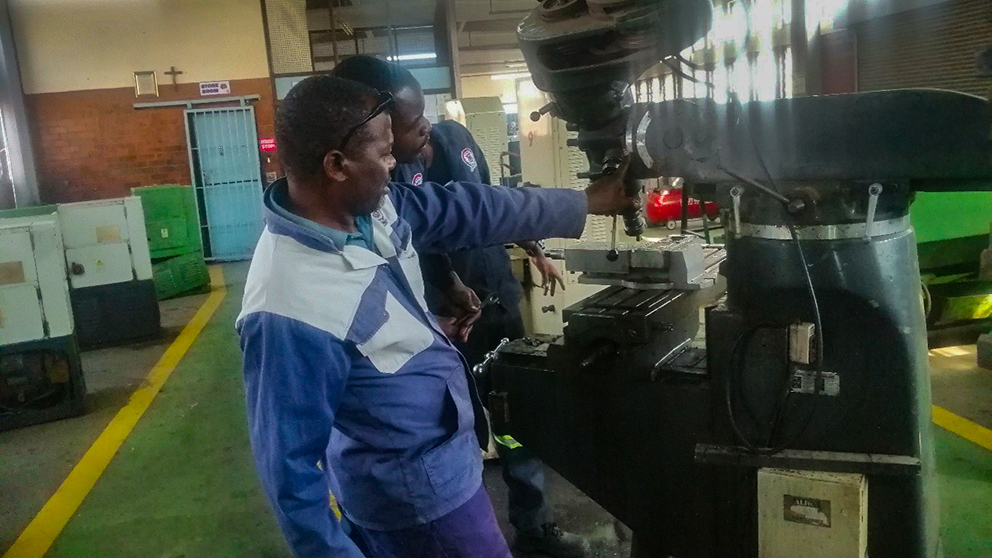 Lecturer and student learning by doing.
Heritage-Based Education 5.0 therefore demands a different kind of lecturer—one who combines subject mastery with practical competence, entrepreneurial acumen, technological literacy, innovation capacity, research skills, and industrial experience hence the need of lecturers to uphold continuous self-development to remain relevant in the world of work which is ever-changing.
There is an urgent need for continuous professional development and capacity building to equip lecturers with the competencies required to implement the Heritage Based Education 5.0 philosophy effectively. Teacher education for tertiary education should therefore prepare lecturers to become facilitators of learning, mentors of innovation, coaches of practical skills, researchers, industrial producers, and champions of community transformation.
The measure of success in education and training should no longer be determined solely by what graduates know, but by what they are capable of doing after graduation. Institutions must produce graduates who are industry-ready, capable of creating employment, solving community challenges, preserving cultural heritage, and contributing meaningfully to Zimbabwe's industrialisation agenda.
Ultimately, Heritage-Based Education 5.0 calls for a complete metamorphosis in the mindset of lecturers. They must embrace their identity as producers of innovators, entrepreneurs, researchers, industrialists, and problem-solvers rather than merely transmitters of information. The transformation of Zimbabwe begins in classrooms, workshops, laboratories, innovation hubs, farms, and production units where committed lecturers inspire learners to convert knowledge into tangible products and services.
The lecturer therefore remains the cornerstone of Heritage-Based Education 5.0. Without committed, innovative, adequately prepared, and patriotic lecturers, the Education 5.0 philosophy cannot realise its full transformative potential. However, lecturers alone cannot achieve this transformation.
Students equally bear significant responsibility for the success of Heritage-Based Education 5.0. They must cultivate discipline, curiosity, creativity, resilience, hard work, and an entrepreneurial mindset while actively engaging in practical learning experiences. The success of this educational philosophy depends upon a productive partnership between dedicated lecturers, committed learners and a conducive teaching learning environment.
My next article, therefore will attempt to examine the critical roles and responsibilities of students within the Heritage-Based Education 5.0 framework and highlights how they can meaningfully complement the efforts of their lecturers. It underscores the principle that education is a shared enterprise in which the dedication, sacrifice, wisdom, and mentorship of lecturers must be met with equal commitment, discipline, creativity, and a spirit of innovation from students in a conducive teaching learning environment.
Only through such a partnership can the transformative vision of Heritage-Based Education 5.0 be fully realised. When students become active participants rather than passive recipients of knowledge, the investments made in their education yield lasting dividends for Zimbabwe's industrialisation, modernisation, sustainable development, and national prosperity. In this way, graduates emerge not merely as job seekers, but as innovators, entrepreneurs, producers, and disciplined citizens committed to advancing the nation's heritage and contributing to the attainment of Vision 2030.